Can my dog have a bite? Holiday foods to share carefully and foods to keep away
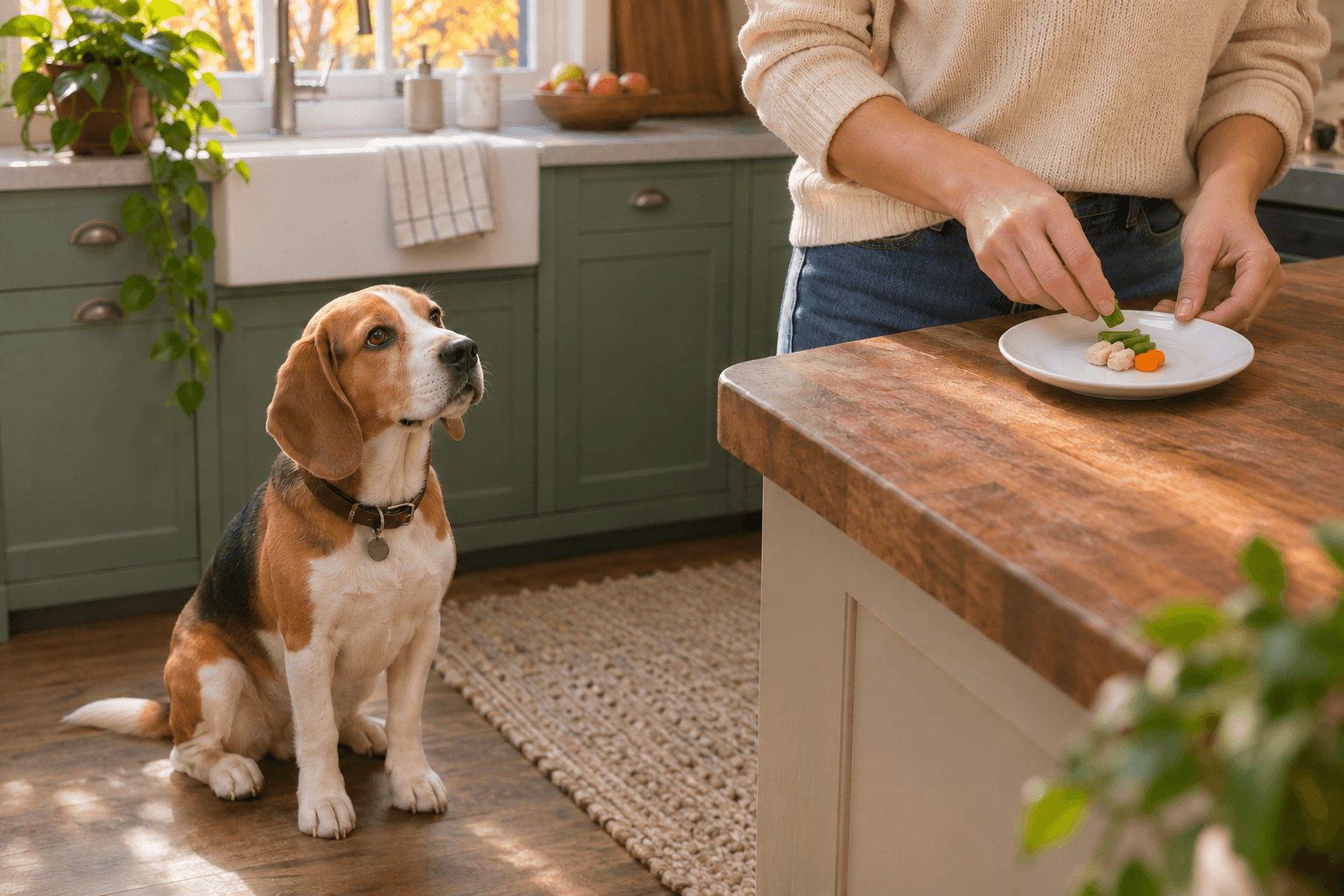
The holiday kitchen smells wonderful, and your dog has noticed. Before you share a bite, check the ingredients as well as the food's name.
A plain green bean and a scoop of green bean casserole can be very different things. So can cooked turkey meat and a plate of skin, bones, and gravy.
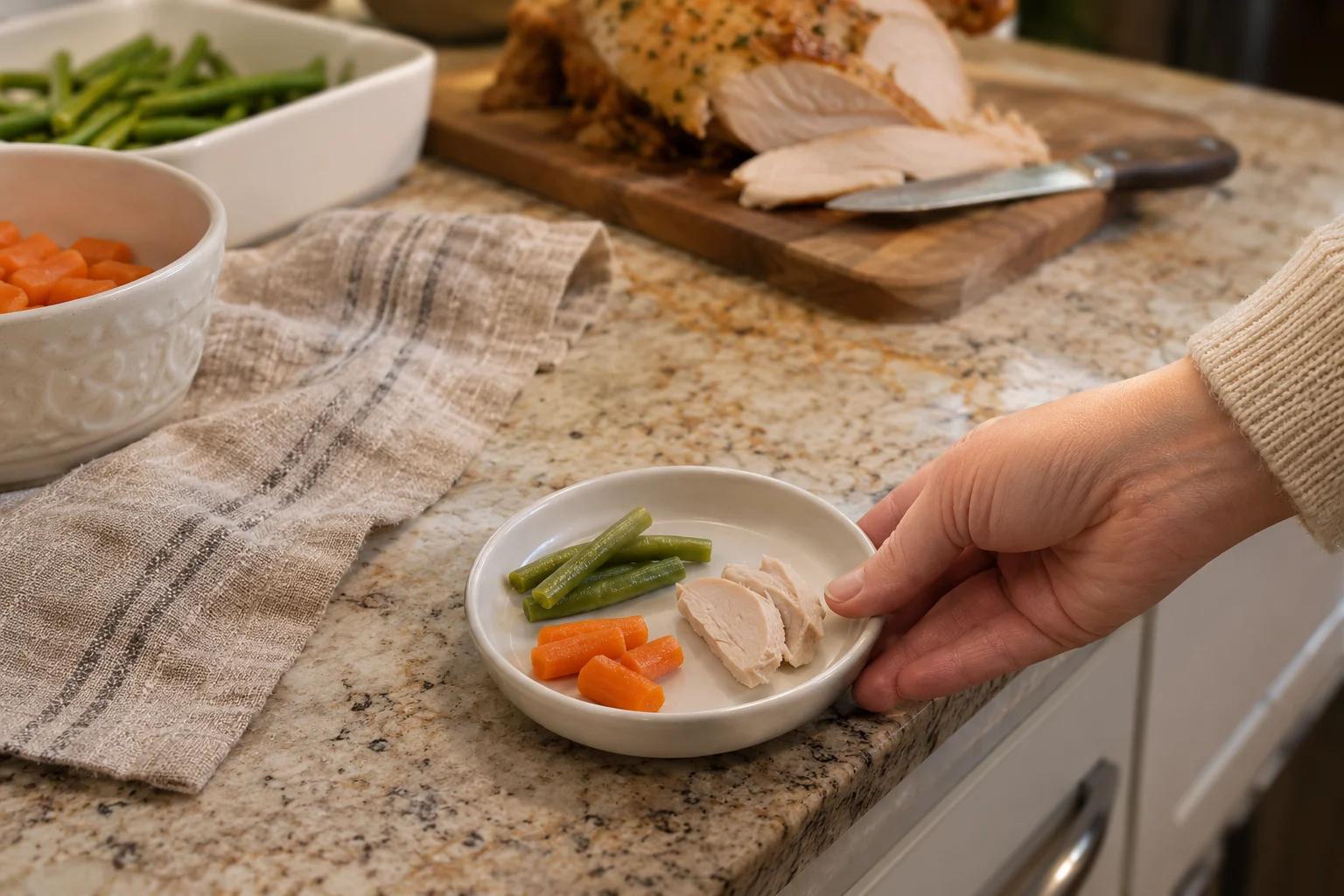
Plain holiday foods you can share in small bites
For dogs whose diet permits them, the American Animal Hospital Association lists these holiday treat alternatives:
- Plain cooked white turkey meat, with bones, skin, and seasoning removed.
- Plain green beans or carrots.
- Plain pumpkin.
- A small amount of plain sweet potato.
- Blueberries.
These are optional tastes, not a replacement meal. “Plain” matters: set a portion aside before adding butter, sauces, seasoning, or sweeteners. Check with your veterinarian before introducing extras if your dog has allergies, a prescribed diet, or a medical condition. AAHA's guidance was checked November 2, 2026.
Make one person responsible for treats. Otherwise, every guest's “tiny bite” can add up to a much larger serving than anyone intended.
Toxic ingredients to keep out of reach
The ASPCA Poison Control food guide, checked November 2, 2026, identifies these important hazards:
- Grapes and raisins: can damage dogs' kidneys. Remember raisin bread and desserts.
- Onions, garlic, and chives: can damage red blood cells. Check stuffing and sauces.
- Chocolate, coffee, and caffeine: can affect the heart and nervous system.
- Xylitol: a sweetener in some gum, sweets, and baked goods; can cause dangerously low blood sugar and liver damage.
- Macadamia nuts: can cause weakness, vomiting, tremors, and other illness.
- Alcohol and raw yeast dough: alcohol is toxic, and rising dough can also dangerously expand in the stomach.
This is not a complete list. A food being absent here does not establish that it is safe. Keep packaging and recipes available if you need advice about an exposure.
Keep bones and rich scraps away, too
Bones and rich leftovers need their own caution. ASPCA warns that bones can injure or obstruct the digestive tract. AAHA notes that high-fat scraps can increase the risk of pancreatitis, a painful condition requiring veterinary care.
Keep turkey carcasses, skin, drippings, and discarded food away from your dog. Secure the trash during preparation and cleanup, too. A plate may leave the table without leaving your dog's reach.
Give guests and pet sitters a simple plan
Agree on four things before the meal.
- Who can give the dog food?
- Which treats, if any, are allowed?
- Where will the dog rest while people cook and eat?
- Who will clear plates and secure the trash?
For a sitter, leave the instructions in writing alongside the usual feeding plan and veterinary contacts.
Please give only the treats in this labeled container.
If your dog eats something concerning
The AVMA's Thanksgiving safety guidance, checked November 2, 2026, recommends immediate contact after suspected poisoning or eating something inappropriate.
Tell the clinician your dog's weight, what was eaten, roughly how much, and when. Save the label or ingredient list. Follow professional instructions; do not attempt to induce vomiting or give a home remedy unless directed.
In the United States, FDA's emergency contact guide lists ASPCA Poison Control at 888-426-4435. A consultation fee applies.
Sources checked November 2, 2026. This guide supports prevention and does not replace urgent veterinary advice.