
What nearly 600 five-star reviews taught me about client loyalty
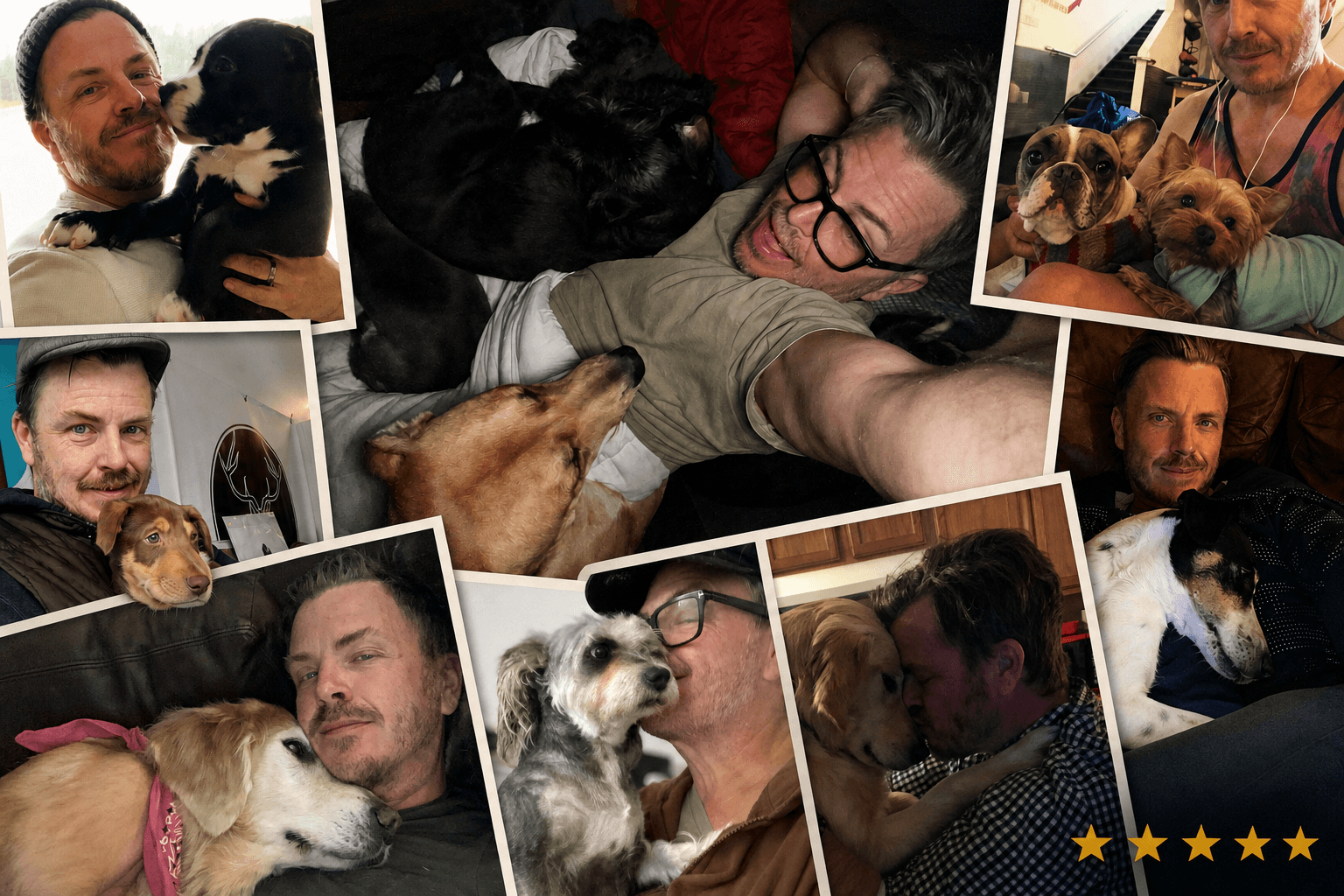
I built my dog-boarding and daycare business in the Bay Area one client, one dog, and one booking at a time. Today, I have nearly 600 five-star client reviews.
But the reviews came later. At the beginning, many people chose me because they connected with my story. It made me more than a name and a list of services. It helped dog lovers understand who would be caring for a member of their family.
That did not happen because I found one perfect promotion or developed an elaborate loyalty program. It happened because I learned to treat pet care as what it is: a service relationship built on trust.
Clients are paying us to be there for them and their dogs. They are not an interruption to the business. They are the business.
The providers who last are not only good with dogs. They are dependable when a client is nervous, clear when plans change, organized when instructions become complicated, and compassionate when life becomes difficult. Those habits may not feel like marketing, but they are the reason clients come back and tell other people about you.
Here is what building my business taught me.
Let people meet the human behind the business
I have known dogs were my people since I was six years old.
In first grade, my teacher asked the class to draw what we wanted to be when we grew up. Most of the other children drew police officers, firefighters, or train engineers. I drew a fenced compound with a house, me, and 13 dogs. The sign on the fence read:
Dogs ONLY. People KEEP OUT.
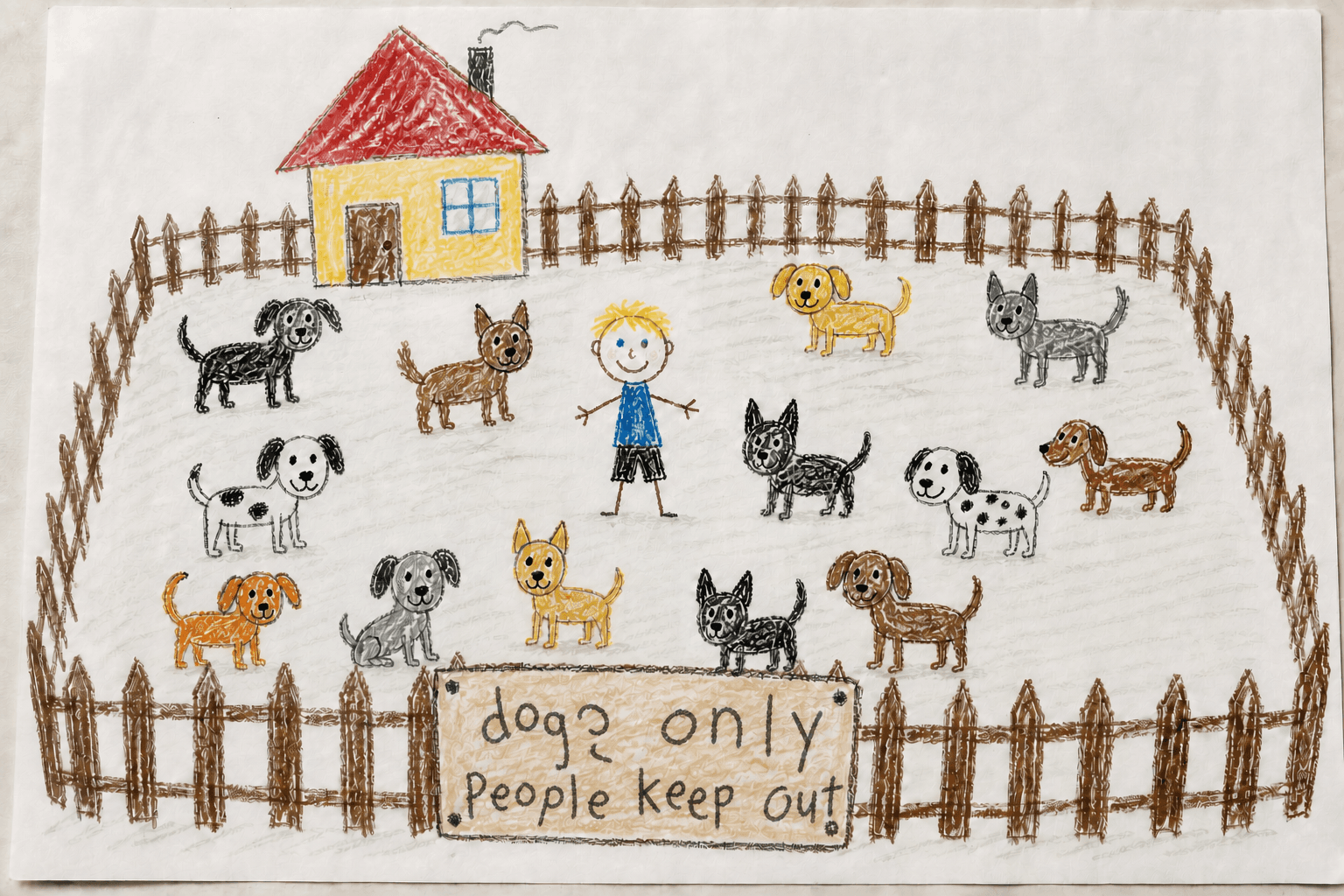
I am still an introvert, and I am happiest at home when dogs are around. Sharing that story helped the right clients recognize something honest about me: caring for dogs was not a side interest I had added to a profile. It had been part of how I pictured my life since childhood.
The story opened the door, but the experience had to support it. When we cared for a dog, one of us was at home. Our secure backyard gave the dogs room to play and regular opportunities to go outside. We followed each dog's normal sleeping routine whenever practical—whether that meant cuddling in bed, making a floor bed nearby, or providing a crate for a dog who preferred it. We also separated dogs at mealtimes to reduce the risk of conflict around food.
Those details helped clients picture the care their dog would receive. They also made the promise personal: I was not asking someone to trust a generic boarding service. I was showing them how their dog would fit into my home and my life.
Your story does not need to resemble mine. It does need to be true. Tell people why you began, what you believe good care looks like, and what they can expect from you. Avoid polishing away every human detail. Clients are deciding whether they trust a person, not only whether the service list meets their needs.
Start with a service mindset
It is easy to organize a business around what is most convenient for the provider. Some structure is necessary—you need policies, operating hours, and limits—but the service still needs to work for the client.
I try to begin with a different question: What would make this easier for the person trusting me with their dog?
That might mean responding promptly when a trip changes, helping a new client understand the booking process, or remembering that someone needs a quiet handoff because their dog becomes overwhelmed at the door. Small moments of consideration tell a client that you understand the responsibility they have given you.
Pet Sitters International identifies trust, transparency, communication, and clear professional standards as important parts of building long-term client loyalty. In my experience, those ideas become real through the ordinary details of every booking.
Be as flexible as safety and capacity allow
Flexibility has been one of the most important parts of growing my business. Flights are delayed. Work schedules move. Family emergencies happen. Clients remember the provider who tried to help when the plan fell apart.
That does not mean saying yes to every request. I cannot make an accommodation that would create an unsafe situation, reduce the quality of care, or commit me to more dogs than I can responsibly manage. A burned-out provider is not doing anyone a favor.
The goal is to avoid making “no” the automatic answer simply because a request is inconvenient. I look for the reasonable version of yes:
- Can the timing move without affecting another booking?
- Can I offer a different service that solves the same problem?
- Can I make a one-time exception and explain that it is an exception?
- If I truly cannot help, can I respond quickly enough for the client to make another plan?
Clear policies and flexibility are not opposites. Policies establish the normal way the business works. Good judgment helps you respond when real life does not follow the normal plan.
Communicate before the client has to ask
Silence creates uncertainty. A client should not have to wonder whether you received a request, confirmed a booking, arrived for a visit, gave a medication, or noticed something unusual.
I try to make communication predictable:
- Acknowledge the request.
- Confirm the service, dates, price, and important instructions in writing.
- Send useful updates during care.
- Report changes or concerns promptly and specifically.
- Close the booking with a summary and a thank-you.
Useful updates are more than “Everything is great.” Tell the client what their dog ate, whether medication was given, how they slept, what happened on the walk, and whether anything differed from the usual routine. A photo adds warmth, but it should support the care update rather than replace it.
Pet Sitters International recommends following verbal conversations with a written confirmation so dates, services, and instructions are not left to memory. This becomes even more important when you add staff. Everyone needs one reliable place to see what was promised and what the dog requires.
Create rules that make the experience calmer
One of my clearest rules is that clients provide an estimated arrival time any time they are coming to my home.
“On my way” is not specific enough. I cannot remember where every client is driving from, and I need time to prepare the dogs and the space. “About 20 minutes away” gives me something useful.
I also ask clients to message rather than ring the doorbell. A doorbell can upset several dogs at once and turn a simple pickup into unnecessary chaos. If I know when a client will arrive, I can be outside and ready for a calmer handoff.
Optional location sharing by text can make this even easier, but an accurate estimate and an arrival message are usually enough.
The important part is explaining why the rule exists. Clients are more likely to respect a policy when they understand that it protects the dogs and makes their own pickup or drop-off smoother. A useful policy feels like service, not punishment.
Remember the person as well as the dog
Dog care is personal. Learn the dog's routines, favorite treats, fears, play style, sleeping habits, and signs of stress. Then pay attention to the human details clients choose to share.
If someone tells me they are traveling for a wedding, starting a new job, or dealing with a family emergency, I remember it. A simple “I hope everything goes smoothly” tells the client they did not disappear into a booking calendar.
This does not require an extraordinary memory. Keep appropriate notes. Review them before the next booking. The goal is to prevent a loyal client from feeling as though they need to reintroduce themselves and their dog every time.
Templates can help you communicate consistently, but every message should not sound automated. Pet Sitters International recommends combining efficient templates with a personal touch. Use the system to remember the details; use your own voice to show that the details matter.
Thank clients—and occasionally surprise them
I always thank clients. I thank them for the booking, for the referral, and for trusting me with their dog again.
Every so often, I give a loyal client a free night or weekend stay. For longer bookings, I may offer a generous discount. On exceptionally long stays—measured in weeks or even months—I may discount the care substantially.
I once cared for a beautiful dog for four months while her owner worked through the strict requirements for moving a dog to Hawaii. The owner was in a bind, so I provided the final several weeks of the stay at no charge to help her complete the move. You do not need to go that far, and every provider has different financial limits. For me, it was the right way to support a client through an unusually difficult situation.
That pricing reflects the reality of the work. Once a dog settles into the household for an extended stay, their schedule becomes part of my own routine. The care remains important, but it can become less disruptive and easier to integrate into everyday life than a series of short arrivals and departures. If the arrangement costs me less time or disruption, I am comfortable sharing some of that value with the client.
I do not treat the gesture as a transaction the client must earn or a public promise attached to a particular number of bookings. It is my way of saying, “I notice that you continue to choose me, and I appreciate it.”
Any free stay or discount needs to be financially sustainable. A discretionary gesture feels generous. A standing promise you can no longer afford feels like something was taken away. If you create a formal loyalty offer, calculate the cost and write down the rules before announcing it.
Often, the most valuable thank-you is still the simplest:
Thank you for trusting me with Luna again. I always enjoy having her here.
Make room for compassion
Some moments are bigger than a normal policy.
If a longtime client is traveling because of a death in the family or another serious emergency, I may offer a large discount or provide the care at no charge. That is a personal decision, not a requirement for every provider or every situation.
Before making an exception, I consider whether I can absorb the cost, whether the care will affect another booking, and whether the decision is sustainable for my business. Compassion should be genuine, not performative—and it should not put the other dogs in my care at a disadvantage.
What the client remembers is not only the discount. They remember that someone recognized what they were going through and responded like a human being. That builds a kind of trust no promotional code can manufacture.
Own mistakes and fix the process behind them
Nearly 600 five-star reviews do not mean nearly 600 perfect experiences. No service business gets every moment right.
When something goes wrong, respond promptly. Listen before defending yourself. Repeat the concern back so the client knows you understand it. Separate what you know from what you still need to investigate, and give a specific time for the next update.
If I made a mistake, I say so plainly. Then I look for the process that allowed it to happen. Did I rely on memory instead of written instructions? Was an arrival policy unclear? Did the client receive confirmation? Did I promise more flexibility than the schedule could support?
An apology addresses the moment. A better system protects the next booking.
Make the professional experience as good as the care
Clients see only part of the work. They may not see the schedule planning, recordkeeping, cleaning, medication checks, emergency preparation, or the time spent reviewing care instructions.
They do feel the result. Organized businesses respond consistently. They know where information lives. They do not repeatedly ask the same question. They can explain their policies and follow through on what they promise.
A simple welcome guide can help. Pet Sitters International recommends using one to explain services, rates, booking procedures, response times, payment policies, and safety expectations. The document does not need to be elaborate. It needs to be current and easy to understand.
Review your client experience from beginning to end:
- Is it clear how to request a booking?
- Does the client know when it is confirmed?
- Are rates and policies easy to find?
- Are feeding, medication, and emergency instructions complete?
- Do updates arrive when promised?
- Does the final message explain how the dog did?
- Is it easy for the client to book again?
Convenience is part of the service. Caring well for the dog is the foundation; making the surrounding experience dependable is what helps the client feel comfortable returning.
The habits that brought clients back
If I had to reduce my experience to a short list, it would be this:
- Treat clients as the reason for the business, not an interruption to it.
- Be flexible when you reasonably can.
- Set clear boundaries so your yes remains dependable.
- Confirm important details in writing.
- Communicate before the client needs to chase you.
- Explain the reason behind rules and policies.
- Remember personal details about the dog and the person.
- Thank people sincerely and recognize loyalty thoughtfully.
- Respond to difficult circumstances with humanity.
- When something goes wrong, improve the system as well as the moment.
Client loyalty was not something I could demand or automate. I earned it by showing up consistently and treating each relationship as important.
That approach helped me build a Bay Area boarding and daycare business with nearly 600 five-star reviews. More importantly, it built a community of clients who trusted me to care for dogs they love. For a dog-care provider, there is no better measure of the business you are building.
For more guidance, see Pet Sitters International’s resources on creating a client welcome packet, preventing client communication mistakes, and sharing client boundaries, as well as SCORE’s customer-retention resources.
This article provides general business information based on the author's experience. It is not legal, financial, insurance, or professional-services advice. Providers should adapt their policies to their business, contracts, insurance coverage, and local requirements.