
Why every pet-care relationship should start with a meet and greet
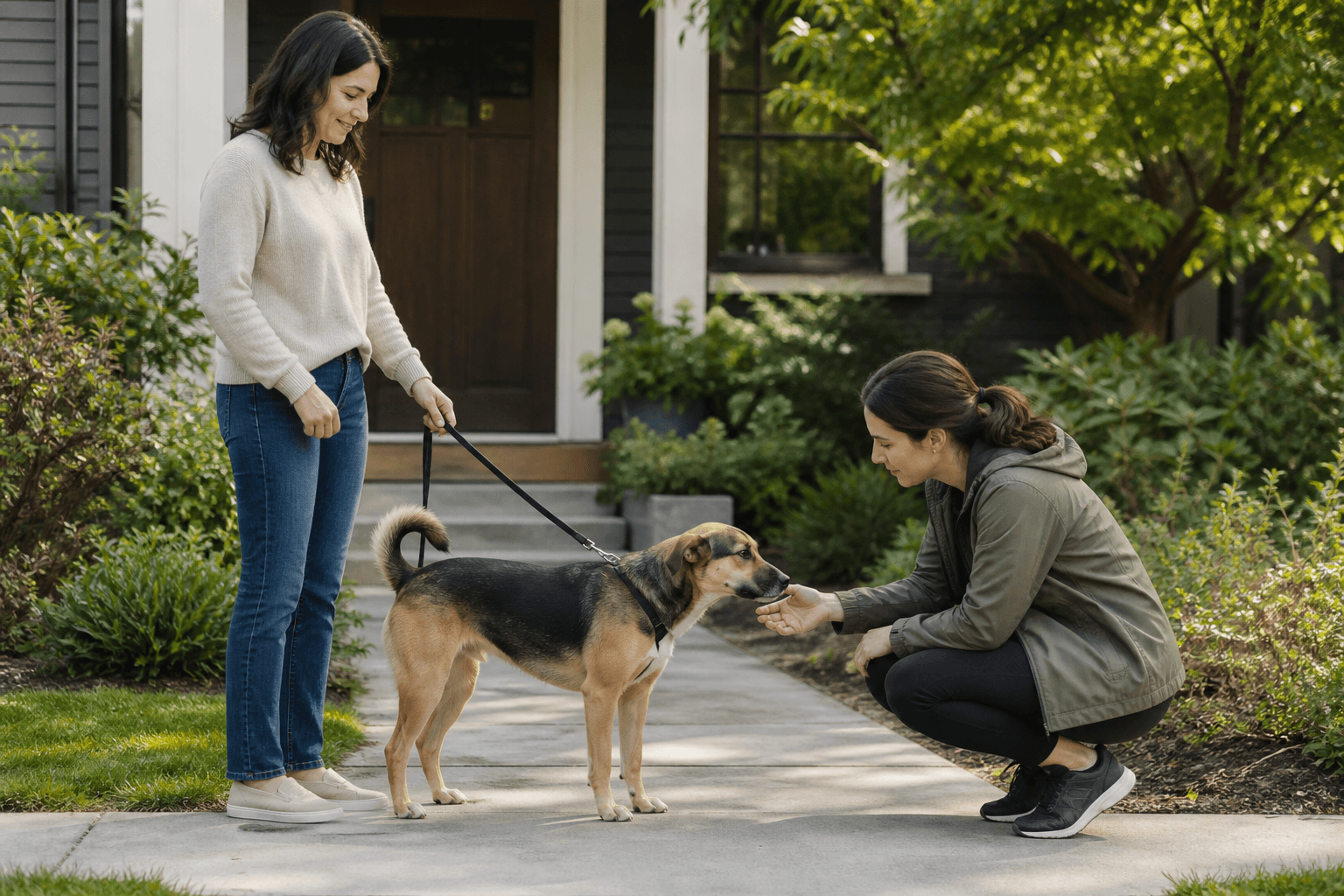
Trust should begin before a leash changes hands.
A meet and greet gives a pet owner and a prospective care provider time to see how the pet responds, talk through the care routine, and decide whether the relationship feels right. That matters for every first booking—not only when a dog may be around other animals or children.
Pet Sitters International recommends an in-person meeting because it lets an owner see a provider interact with their pet and gives both people time to review services, credentials, and policies. The meeting cannot predict every behavior, but it can surface questions that a form or text exchange may miss.
Chemistry is part of the care plan
Dogs do not respond to every person in the same way. A dog may be social with one new person, cautious with another, or too excited to settle. Watch the interaction without forcing it. Is the dog able to approach at their own pace? Do they relax after the initial greeting? How do they respond when the provider moves around the room, reaches for a leash, or follows the owner's normal handling routine?
A dog may also behave differently after the owner leaves. Some become more reserved or vocal; others settle and form a temporary attachment to the person caring for them. The goal is not to promise an instant bond. It is to identify what helps the pet feel secure and to make a plan for the transition.
If the pet will encounter children or other animals during care, discuss that environment explicitly. Do not treat a friendly first greeting as permission for unsupervised contact. The owner should disclose known history and triggers, and the provider should explain how introductions, separation, and supervision will work.
Ask about behavior in real situations
“Is your dog friendly?” rarely produces enough useful information. Ask how the pet behaves in specific situations:
- Where does the pet normally sleep, rest, eat, and go to feel safe?
- How do they respond to unfamiliar adults, children, dogs, cats, bicycles, delivery workers, or visitors at the door?
- What happens on leash when another dog or person approaches?
- Do they guard food, toys, furniture, doorways, or a favorite person?
- Are they frightened by storms, fireworks, alarms, crates, touch, or being left alone?
- Have they ever escaped, bitten, snapped, or injured another animal?
- What signs show that they are anxious, overstimulated, in pain, or ready for space?
- Which cues and rewards does the owner use consistently?
Pet owners should answer plainly, even when a behavior feels embarrassing. Providers need accurate information to decide whether they have the right environment and experience. Providers should be equally candid about the number and types of animals present, access to children, containment, and how much direct supervision the service includes.
Walk through food, allergies, and the daily routine
Ask what the pet eats, how much, when, and where. Confirm which treats and chews are allowed, how food is stored, and whether pets in a shared environment must eat separately.
Document known food sensitivities and allergies. Chicken is among the proteins that can cause food allergies in some dogs, but neither an owner nor a provider should diagnose an allergy during a meet and greet. A veterinarian can help evaluate symptoms and determine an appropriate diet.
The same caution applies to an upset stomach. Do not assume that chicken, rice, pumpkin, fasting, or another home remedy is appropriate for every dog. Record the owner's veterinarian-approved plan, including what the provider may give, how much, when to call the owner, and when veterinary care is required.
The American Animal Hospital Association's pet-sitter guidance also recommends documenting the pet's normal schedule, activity, restrictions, favorite hiding places, and the location of supplies. Familiar routines can help reduce stress when the owner is away.
Review every medication and supplement
Create a complete list of prescriptions, over-the-counter products, and supplements. For each one, record:
- the exact name and dose;
- the time and frequency;
- how it is administered;
- storage requirements;
- what to do if a dose is late, missed, refused, or vomited; and
- the veterinarian or emergency contact to call with a concern.
Whenever possible, have the owner demonstrate the normal method and let the provider explain it back. Confirm that enough medication will be available for the entire booking in its original labeled container. A provider should never change a dose or substitute a product without authorization from the owner and the prescribing veterinarian.
Agree on emergencies and decision-making
Before care begins, both people should know what happens if the owner cannot be reached. Confirm:
- the primary veterinarian and nearest emergency clinic;
- a local backup contact who knows the pet;
- relevant medical conditions and warning signs;
- transportation expectations;
- authorization for urgent veterinary care; and
- how expenses and reimbursements will be handled.
For in-home care, also review access instructions, alarms, locks, cameras, and areas that are off-limits. For care in the provider's home, review gates, fencing, sleeping arrangements, separation areas, and the household's emergency plan.
Set arrival rules before the first handoff
Clear arrival expectations protect the provider's time and help keep the dogs calm. If care takes place in the provider's home, it is reasonable to require a specific estimated arrival time before every drop-off and pickup.
“On my way” may not be enough when clients are traveling from different places. Ask for an updated arrival estimate, such as “about 20 minutes away,” and have the provider meet the client outside when practical. That can prevent a ringing doorbell from setting off the household or creating a difficult doorway handoff.
Live location sharing can be helpful, but it should remain optional. An accurate arrival estimate and a message when the client is outside are usually enough. Put the policy in writing so it feels like a normal part of service rather than a correction directed at one client.
Make the first booking easier to evaluate
When practical, begin with a lower-stakes service before a long stay: a walk, a drop-in visit, daycare, or a shorter overnight. This does not replace the meet and greet, and it does not guarantee that every future visit will be identical. It gives the provider more information about how the pet settles after the owner leaves and gives the owner a chance to evaluate communication and care.
Afterward, share what the pet ate, how they rested, bathroom habits, social interactions, medication administration, and anything that differed from the care plan. Specific updates build more confidence than a generic “everything was great.”
Good service is personal—and sustainable
Pet care is a service relationship. Owners are trusting someone with a family member; providers are responsible for being dependable, prepared, and as flexible as safety and capacity allow. Clear boundaries and a service mindset belong together.
Always thank the client. Learn the pet's preferences and remember the human details clients choose to share. An occasional complimentary add-on, small credit, or thoughtful gesture can recognize a loyal relationship without turning generosity into an automatic entitlement.
There may also be moments when compassion matters more than a standard policy. A provider may choose to reduce or waive a fee when a longtime client is traveling for a family emergency or loss. That decision should be voluntary, financially sustainable, and documented consistently. The value is not the discount alone; it is showing the client that they and their pet are known.
A meet-and-greet checklist to keep
Before confirming the first booking, make sure both people can answer these questions:
- Does the pet appear reasonably comfortable with the provider?
- Have behavior, triggers, bite or escape history, and social boundaries been discussed honestly?
- Is the feeding plan specific, including allergies and forbidden foods?
- Are medications, supplements, and administration instructions complete?
- Are veterinarian, emergency, and backup contacts current?
- Does everyone understand the service, supervision, home environment, and arrival rules?
- Is the owner comfortable with the provider's policies—and is the provider confident they can meet the pet's needs?
- Are the final instructions written somewhere both people can access?
The best meet and greets feel less like an interview and more like the beginning of a working relationship: honest, attentive, and centered on the pet. Taking that time before the first booking gives the owner, provider, and animal a better chance to begin with trust.
For additional preparation, see Pet Sitters International's guidance on choosing a pet sitter, the AAHA pet-sitter instruction checklist, and VCA Animal Hospitals' overview of food allergies in dogs.
This article provides general pet-care and business information. It is not a substitute for veterinary, medical, behavioral, legal, or insurance advice.