Are training treats bribery? How to reward the dog you want to walk
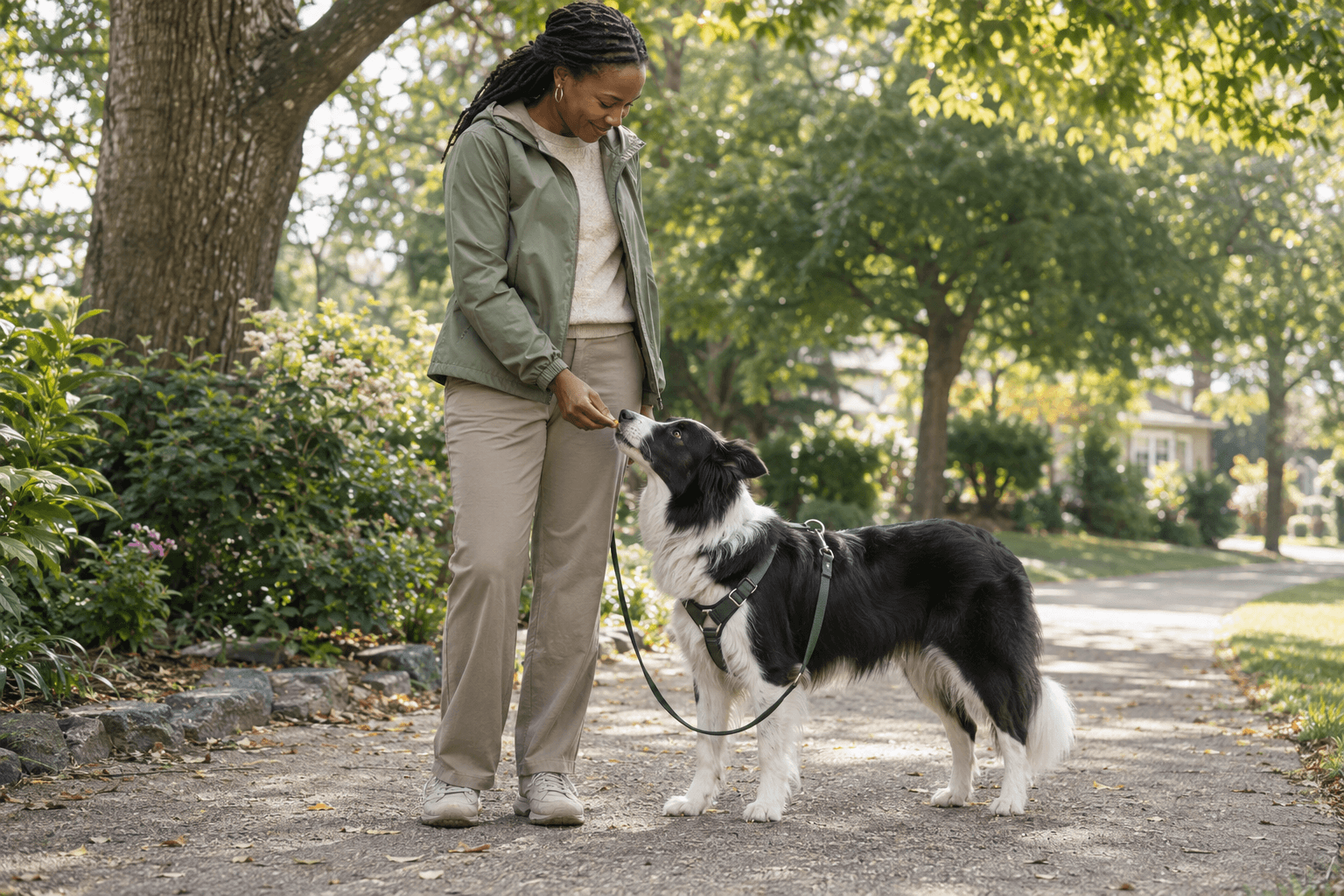
Your dog can sit beautifully in the kitchen. Outside, a squirrel appears and the lesson seems to disappear. Does that mean the treats failed?
Before changing methods, look at what changed around your dog. The living room and a busy sidewalk are very different classrooms.
The American Veterinary Society of Animal Behavior's 2021 humane-training statement, reaffirmed by its board in 2025, recommends reward-based methods for training and behavior work. It advises against methods that use pain, fear, or discomfort, including shock (electronic) collars, prong collars, and leash corrections. See AVSAB's current position statements, checked November 2, 2026.
Reward the behavior you want to see again
A reward tells your dog which action worked. It might be a small food treat, a game, or attention your dog enjoys. The important question is whether your dog actually values it in that moment.
Dogs Trust's reward-based training guide, checked November 2, 2026, recommends rewarding each successful repetition when teaching something new. A marker such as “yes” can identify the exact moment your dog gets it right; follow that marker with the promised reward.
Your dog looks toward you. Say “yes,” then deliver the treat.
That sequence gives your dog feedback about the action that just happened.
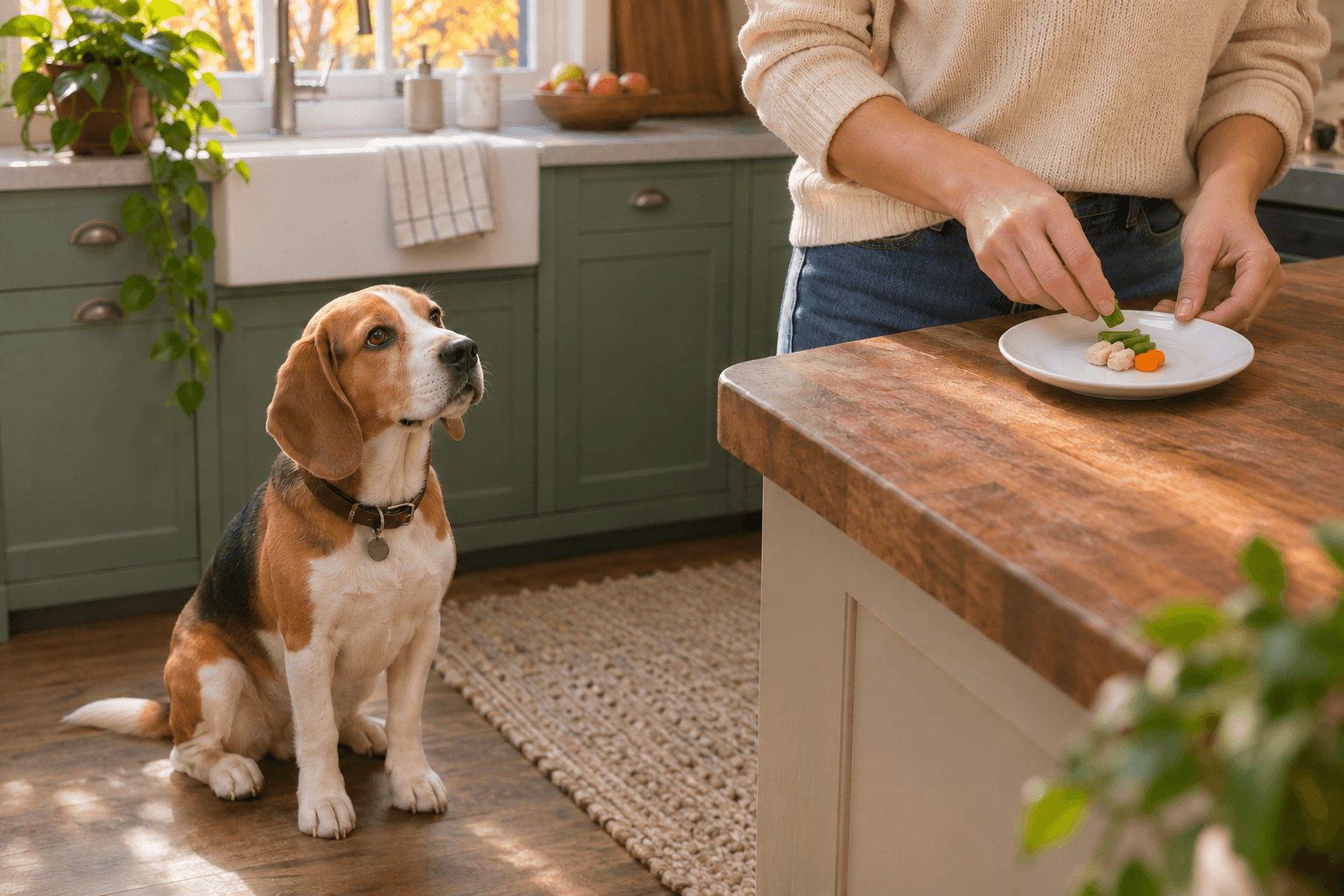
Rewards also need to fit the setting. Something that interests your dog at home may be less compelling outdoors. Include training food in your dog's daily food allowance, and use only foods compatible with their diet.
Practice a few steps before expecting a whole walk
Start somewhere quiet with room for a few steps.
- Put on your dog's comfortable, properly fitted walking equipment.
- Choose which side you want your dog to walk on and reward them there.
- Take one or two steps. Mark and reward while the leash remains loose.
- Gradually add steps as your dog succeeds.
- When you move somewhere more distracting, make the exercise easier again.
This approach follows Battersea's leash-training guidance, checked November 2, 2026. Its advice includes short sessions, rewards beside your leg, planned sniffing breaks, and pausing when the leash tightens rather than pulling your dog back.
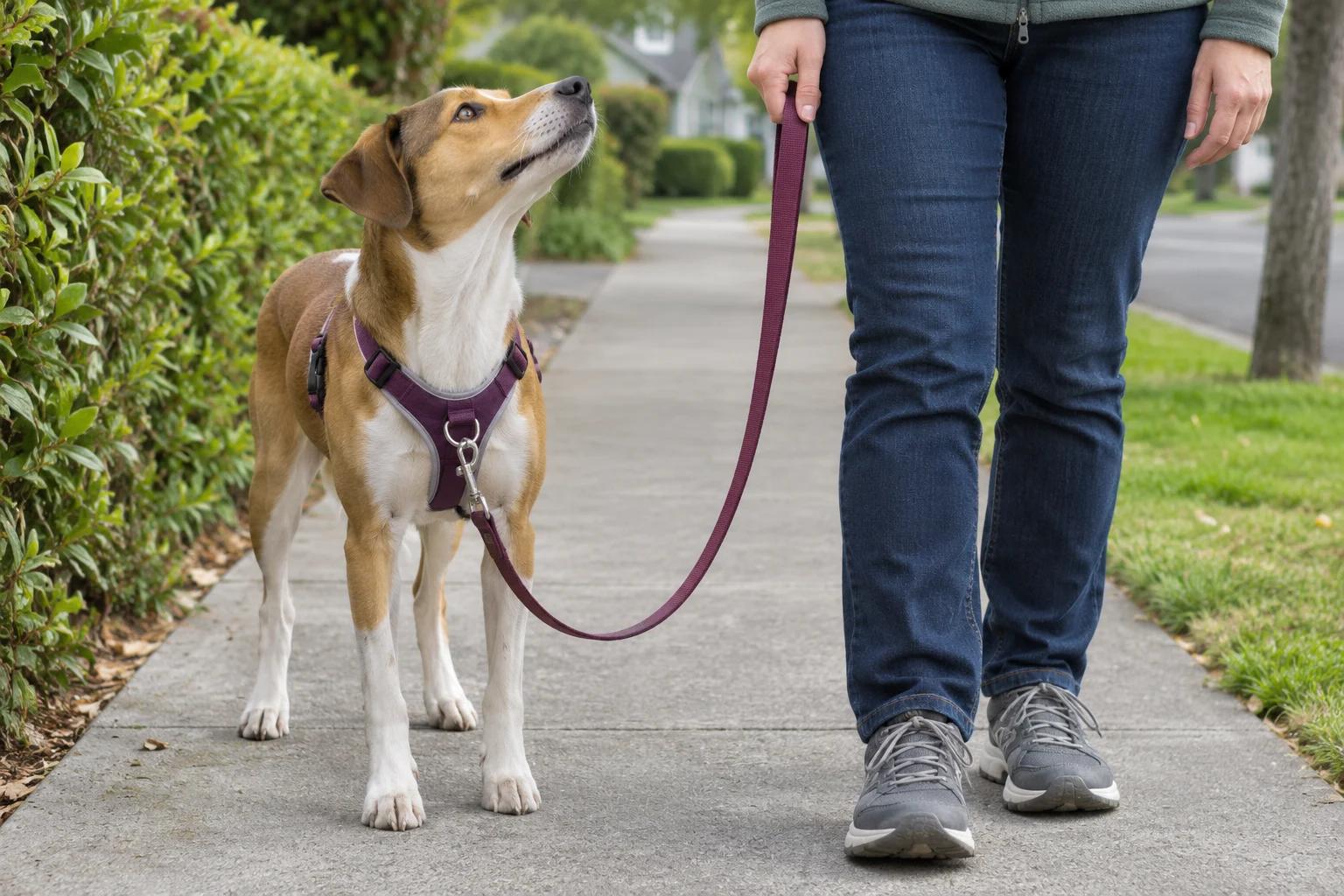
Look for small changes: more check-ins, a few more relaxed steps, or an easier return to the exercise after a distraction. Your first practice session does not need to resemble a polished training video.
Give everyone the same instructions
If family members and a dog walker share care, give them a short written plan.
- Cue: Which word means “walk with me”?
- Reward: What is allowed, and how much can the walker use?
- Practice: Where is the dog currently comfortable working?
- Boundaries: Which situations should the walker avoid?
Ask for an update such as “We practiced on the quiet block and managed several short stretches with a loose leash.” That tells you more than “good walk.”
What to ask a dog trainer
AVSAB's 2026 guide to choosing a trainer encourages owners to investigate qualifications and training methods. Ask what happens when a dog gets something wrong, what equipment will be used, and how the trainer responds to fear or stress.
Seek qualified help if you cannot handle walks safely or your dog's behavior is escalating. Sudden behavior changes also deserve a conversation with your veterinarian. You do not have to solve a safety concern through trial and error on the sidewalk.
Sources checked November 2, 2026. General training information; an individual behavior or safety concern needs professional assessment.